

Digital2060
Connecting AI Infrastructure to Power and Place

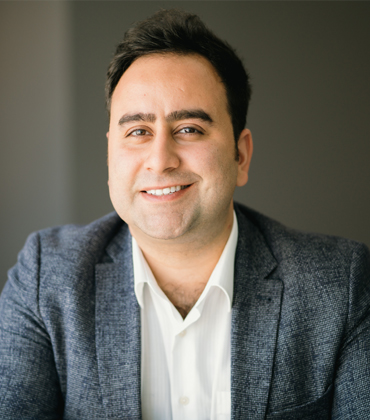 Okan Turedi, CEO
That creates a difficult conversation between operators and territories. An operator may need 500 megawatts and the land to support it, while a territory may have only 20 megawatts available. Bringing those requirements together is where Digital2060 operates. The data center development company, drawing on deep knowledge of France’s grid and territories, assesses what locations can realistically offer, identifies operators whose requirements match those conditions, and prepares both sides before they meet.
“We make operators and territories talk because we know exactly what they both really want, and as we are totally independent in our choice, both parties trust us,” says Okan Turedi, CEO.
The distinction is important because Digital2060 is not simply matching available land with data center demand. Its work begins with understanding whether a territory can support the scale of infrastructure an operator needs, with power connection management at the center of that assessment. Over the past 24 months, the company has managed more than two gigawatts of connections in France, including high-voltage connections from 225 kV to 400 kV. This understanding of France’s grid and its local specifics is a key advantage as projects require increasingly large connections.
Digital2060 operates with a five-person team of industry veterans and processes are deeply AI-native, allowing the company to handle substantial workloads with a deliberately lean structure. That operating model is supported by a closed database covering fiber optics, risks, and data center developments across Europe. Together, the team, AI-native processes, and accumulated data support the company’s work as it evaluates potential locations and the infrastructure conditions surrounding them.
-
We make operators and territories talk because we know exactly what they both really want, and as we are totally independent in our choice, both parties trust us.
Once a potential location has been assessed, Digital2060 identifies the architects, engineering companies, and permitting providers needed to move the project forward. It also works with local authorities to explain data center projects and help build local acceptance. Because some territories welcome data centers while others oppose them, the company focuses on locations where the door is most open to development.
A project in Dunkirk shows how quickly site selection is evolving, marking France’s first AI-factory deal outside the traditional availability-zone model. Digital2060 helped bring a 600 MW land opportunity to SoftBank after more than nine months of European and American operators declining the location because it fell outside their traditional investment areas. As AI infrastructure requirements increased, the limitations of established locations became more apparent. Securing power for projects of this scale became increasingly difficult around Paris and Marseille, while Dunkirk had 250 MW of power delivery planned for 2028 at an attractive cost. Those conditions made the site attractive to SoftBank.
Beyond finding the right locations for AI infrastructure, the company wants communities to benefit from its development. One opportunity is reusing data center heat to warm greenhouses, homes, or municipal swimming pools, turning waste heat into a local resource. In the future, similar infrastructure could support district cooling as cities contend with rising temperatures.
As AI reshapes the scale, economics, and geography of data centers, operators are investing more in GPUs and AI technology while seeking cheaper land and lighter, modular infrastructure. At this intersection, Digital2060 continues helping operators secure the infrastructure they need while giving territories a greater role in shaping what arrives. That vision of connecting the demands of an evolving AI market with the needs of local communities has earned the company recognition as one of the Top AI Powered Data Center Development Services in Europe 2026.
Power and Site Readiness for AI Data Centers
Power availability now dictates where many AI data center projects can move from proposal to construction. Large computing loads can push projects beyond the capacity of familiar metropolitan clusters, making grid access a development constraint rather than a late-stage engineering check. A low-cost site has little appeal if connection capacity is uncertain or delivery dates depend on major network works. Buyers need a development partner that can assess power feasibility early enough to prevent land commitments from outrunning electrical reality.
Site economics have also changed as AI facilities grow larger and capital shifts toward compute equipment. Land outside traditional data center hubs can make financial sense, but a lower purchase price does not compensate for weak fiber access or a difficult power path. Development teams need a clear view of how site cost interacts with connection timing and buildable capacity. That assessment should happen before design assumptions harden. It is also useful to distinguish between sites that can support incremental expansion and those suited to very large loads without forcing expensive rework later.
Local acceptance can delay an otherwise credible site. Municipalities may have concerns about land use and infrastructure pressure, while project sponsors need clarity on permitting expectations and what a territory is prepared to host. The development partner has to translate project scale into terms local authorities can assess without turning the process into a sales exercise. Early alignment matters because a territory prepared for a smaller facility can lose confidence when presented with a much larger power request. Productive development starts when each side enters the discussion with realistic parameters.
“Digital2060 has managed more than 2 GW of grid connections in France over the past 24 months and has experience with high-voltage connections ranging from 225 kV to 400 kV.”
Technical readiness is only part of the decision. Large AI projects require specialist contributors whose work must fit the site, grid path, permitting sequence and construction schedule. A partner that merely introduces architects or engineering firms leaves the buyer to assemble the development chain alone. Better support means identifying the right external specialists for the project and keeping their work tied to the same schedule. That reduces the risk of design work advancing while power or approvals remain unresolved.
Connection certainty should also be judged by process rather than headline capacity. Very large facilities may require transmission-level connections that differ materially from the distribution work familiar to many development teams. The buyer needs evidence that a partner understands the utility sequence for securing capacity and the dependencies that can move a delivery date. It should also distinguish between power that appears technically feasible and capacity that has reached a meaningful stage in the connection process.
Digital2060 works on large-scale data center projects in France where grid connection and territorial readiness are critical to development. It has managed more than 2 GW of grid connections in France over the past 24 months and has experience with high-voltage connections ranging from 225 kV to 400 kV. Its role also includes helping clients engage with local authorities and bringing together the architects, engineering companies, and permitting specialists needed for each project. Rather than providing these services itself, Digital2060 identifies and coordinates the right specialists for each need. The company operates with a five-person team of industry veterans, while its AI-native processes and closed database covering fiber optics, risks, and data center developments across Europe support its ability to handle a broad range of work.
...Read more
| Share this Article: Tweet |
Company
Digital2060
Management
Okan Turedi, CEO
Description
Digital2060 develops data center projects for cloud and AI operators, with expertise spanning real estate, energy, connectivity, investment, and sustainability. The company focuses on supporting digital infrastructure development while considering local communities, environmental priorities, and long-term economic value. Its multidisciplinary approach covers projects from site identification through development and commercialization.
Top
