

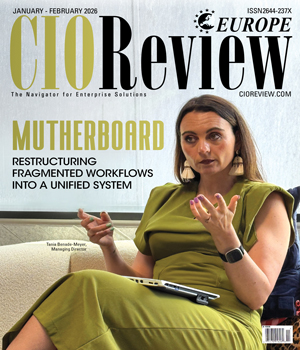
Mutherboard
Restructuring Fragmented Workflows into a Unified System

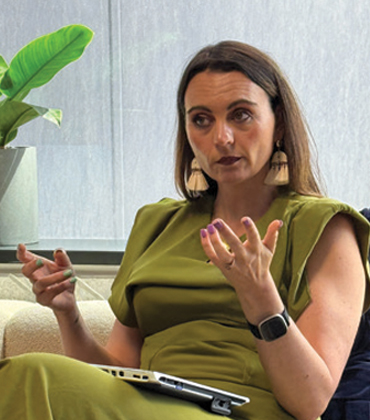 Tania Benade-Meyer, Managing Director
Mutherboard was built to address this problem at its source.
Based in London and Harrogate, it restructures fragmented operational environments into unified systems where projects, resources and integrations work together and workflows and data remain connected in real time. Working across platforms including monday.com, Projectworks and Make. com, Mutherboard helps growing organisations achieve measurable ROI without slowing momentum or overwhelming teams. Its focus is not automation for speed alone, but on restoring coherence to how work moves through an organisation, how projects are governed and how resources are deployed.
Project Management and AI
Mutherboard designs project and programme environments that make timelines, dependencies, risks and status unambiguous across portfolios. Boards, dashboards and automations are structured so teams can see what is due when, what depends on what and where the blockers are without navigating multiple tools.
AI is used to surface project risks and suggested actions at speed, using signals such as overdue milestones, dependency slippage, capacity constraints and stalled approvals. Instead of manually hunting for problems, delivery leads receive proactive prompts on where to intervene and which stakeholders to unblock, turning project systems into early-warning layers rather than static reporting tools.
Resource Management Focus
Resource management remains one of the hardest operational problems to solve, because there is no one-size-fits-all model. Mutherboard builds advanced, bespoke resource management solutions tied directly to project and programme management, using different platforms. These models can reflect different ways of planning work, from retainers and time-and-materials to fixed-fee projects and internal initiatives.
Resources are treated broadly, including people, meeting rooms, corporate venues and specialist equipment. By incorporating AI into planning, routine tasks such as assignment, reassignment and conflict checking are reduced, allowing managers to focus on proactive decisions about where to place capacity and how to protect critical paths. The result is less time spent updating plans and more time spent managing risk, utilisation and profitability.
Integrations as the Backbone
Rather than layering automation on top of inefficiencies, Mutherboard redesigns execution pathways between platforms. Task-based approaches such as robotic process automation and UI scripting were designed to replicate actions, not manage complexity and often fail when interfaces change and demand constant maintenance. Mutherboard avoids this trade-off by designing automation at the system level, allowing applications to communicate directly through API-led, no-code integrations.
As organisations adopt more micro-apps and AI tools, the risk of a new wave of disconnected systems grows. Mutherboard’s integrations bring CRM, HR, finance, project delivery, AI assistants and niche tools into a unified source of truth, so leaders can see in one place what is happening across the business, where there are blockers, where time is being lost and where money can be saved or efficiencies unlocked. Workshops help customers understand their current landscape, define a future-state architecture and then work collaboratively with Mutherboard to close the gap.
Reliability, Ownership and Security
Reliability is reinforced through proactive design. Guardrails prevent common errors before they occur, while recovery logic maintains stability under real-world conditions, including automatic retries and targeted notifications when exceptions persist.
Long-term success depends on ownership. Mutherboard designs monday.com environments to remain performant as volume grows, using efficient board structures, clear indexing and streamlined dependencies to avoid bottlenecks, while enabling internal champions to manage routine change without being locked into opaque logic. Integrations operate as pass-through layers, processing data in real time without persisting sensitive information and are built on platforms aligned with GDPR and ISO 27001 standards, including EU data residency options.
Resource management remains one of the hardest operational problems to solve, because there is no one-size-fits-all model. Mutherboard builds advanced, bespoke resource management solutions tied directly to project and programme management, using different platforms. These models can reflect different ways of planning work, from retainers and time-and-materials to fixed-fee projects and internal initiatives.
Resources are treated broadly, including people, meeting rooms, corporate venues and specialist equipment. By incorporating AI into planning, routine tasks such as assignment, reassignment and conflict checking are reduced, allowing managers to focus on proactive decisions about where to place capacity and how to protect critical paths. The result is less time spent updating plans and more time spent managing risk, utilisation and profitability.
Integrations as the Backbone
Rather than layering automation on top of inefficiencies, Mutherboard redesigns execution pathways between platforms. Task-based approaches such as robotic process automation and UI scripting were designed to replicate actions, not manage complexity and often fail when interfaces change and demand constant maintenance. Mutherboard avoids this trade-off by designing automation at the system level, allowing applications to communicate directly through API-led, no-code integrations.
-
Mutherboard builds advanced, bespoke resource management solutions tied directly to project and programme management, using different platforms. These models can reflect different ways of planning work, from retainers and time-and-materials to fixed-fee projects and internal initiatives.
As organisations adopt more micro-apps and AI tools, the risk of a new wave of disconnected systems grows. Mutherboard’s integrations bring CRM, HR, finance, project delivery, AI assistants and niche tools into a unified source of truth, so leaders can see in one place what is happening across the business, where there are blockers, where time is being lost and where money can be saved or efficiencies unlocked. Workshops help customers understand their current landscape, define a future-state architecture and then work collaboratively with Mutherboard to close the gap.
Reliability, Ownership and Security
Reliability is reinforced through proactive design. Guardrails prevent common errors before they occur, while recovery logic maintains stability under real-world conditions, including automatic retries and targeted notifications when exceptions persist.
Long-term success depends on ownership. Mutherboard designs monday.com environments to remain performant as volume grows, using efficient board structures, clear indexing and streamlined dependencies to avoid bottlenecks, while enabling internal champions to manage routine change without being locked into opaque logic. Integrations operate as pass-through layers, processing data in real time without persisting sensitive information and are built on platforms aligned with GDPR and ISO 27001 standards, including EU data residency options.
What Intelligent Automation Must Deliver for Growth-Stage Businesses
Intelligent automation adoption in the UK has progressed beyond early experimentation, yet many organisations remain constrained by structural weaknesses created during initial digitisation efforts. Executives responsible for automation investments often inherit environments built through incremental tool adoption, where systems were introduced to solve discrete problems rather than operate as a unified whole. The outcome is fragmentation, duplicated data and workflows that rely on spreadsheets. In this scenario, automation often exacerbates inefficiency rather than correcting it.
A credible, intelligent automation solution must begin with system coherence. Businesses struggle when sales, delivery and finance depend on disconnected applications that require constant reconciliation. Task-level automation alone cannot resolve this. What is needed is an integrated approach that allows information to move directly between systems without human mediation. API-led connectivity provides greater resilience than screen-based automation, which remains vulnerable to interface changes and ongoing maintenance. This distinction is foundational, as it determines whether automation strengthens organisational continuity or introduces a new source of fragility.
Speed to value forms the second defining criterion. Lengthy implementation cycles have historically undermined automation programmes, consuming internal resources before measurable benefits emerge. Growth-oriented organisations cannot justify solutions that require extensive reconfiguration before delivering results. Intelligent automation must demonstrate impact within weeks while remaining flexible enough to reflect how the business actually operates. This depends on a delivery model that combines structured automation foundations with hands-on configuration, allowing workflows to be shaped around real processes rather than abstract templates. Rapid deployment only matters when relevance is preserved.
Cost discipline and workforce adoption together form the third aspect through which automation should be evaluated. Many UK organisations operate under tight budget constraints and cannot support expanding software stacks or inflexible pricing models detached from actual usage. Effective automation should consolidate tools, reduce licence overlap and align cost with need. Adoption depends equally on how automation is introduced internally. Solutions that emphasise clarity, practical demonstrations and direct engagement tend to reduce resistance and improve utilisation. When automation is framed as a means to remove manual burden and limit unnecessary hiring, productivity gains are more sustainable.
Within this framework, Mutherboard aligns closely with current automation requirements. Its approach centres on API-led integration designed to unify workflows across platforms rather than automate isolated tasks, supporting consistent data flow between teams. Its delivery model prioritises rapid time-to-value through pre-built automation frameworks and hands-on implementation, enabling organisations to see tangible progress without prolonged disruption. By consolidating systems and aligning services to actual requirements, it addresses cost sensitivity while supporting adoption. Its positioning of automation as an enabler of existing teams reinforces utilisation rather than replacement.
For executives evaluating intelligent automation solutions in the UK, the benchmark is no longer feature breadth or aspirational positioning. It is coherence across systems, speed to measurable value and economic clarity. Against these criteria, Mutherboard represents a sound choice for organisations seeking to move beyond fragmented automation and establish a stable foundation for scalable growth.
...Read more
| Share this Article: Tweet |
Company
Mutherboard
Management
Tania Benade-Meyer, Managing Director
Description
Mutherboard.com is an automation and process consulting firm that helps small and mid‑sized businesses streamline operations using monday.com and custom workflows. It’s a monday.com platinum partner, building tailored automation solutions for CRM, finance, HR, marketing, project management, resource management and NGOs to save time and improve visibility across the business.
Top
