IoT Tech Expo Europe

CIO Review Europe | Wednesday, August 14, 2024

The IoT Tech Expo Europe 2024 promises a comprehensive programme of presentations, networking sessions, and exhibitions, providing a platform for industry insights and future trends in IoT. It’s set to be a key event for anyone involved in the rapidly evolving field of the Internet of Things.

Amsterdam is gearing up to host the IoT Tech Expo Europe on 1-2 October 2024 at the RAI exhibition and convention centre. The event is expected to draw around 7,000 attendees, including 150 speakers and 200 exhibitors. With eight additional co-located events planned, this expo will be a significant opportunity for professionals to engage with the latest developments in the Internet of Things (IoT).

Stay ahead of the industry with exclusive feature stories on the top companies, expert insights and the latest news delivered straight to your inbox. Subscribe today.

A Key Event for IoT Professionals

The IoT Tech Expo Europe has established itself as a leading European conference and exhibition for IoT professionals, industry leaders, and tech enthusiasts. Emphasising innovation, advanced technologies, and practical applications, this event attracts those eager to explore the transformative potential of IoT across various industries.

IoT Tech Expo Agenda

The IoT Tech Expo Europe promises a knowledge-packed agenda, featuring presentations and panel discussions that explore the latest advancements and applications of IoT technology. Attendees will gain insights into how IoT is driving digital transformation across various sectors, from retail and utilities to telecommunications and industrial manufacturing.
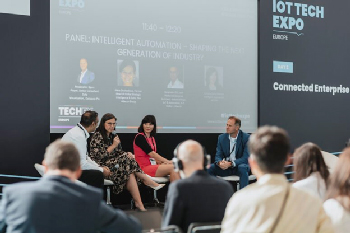
Key topics include the integration of IoT with edge computing, which is unlocking new potentials by enabling real-time data processing and analytics at the source. This, in turn, enhances the efficiency and security of IoT deployments, particularly in critical sectors like smart cities and industrial settings. Additionally, the expo will shed light on the role of machine learning models on edge devices, which are pushing the boundaries of automation and sustainability in industrial IoT applications.

Furthermore, discussions will cover the growing importance of cyber resilience in today’s digital world, with a focus on defense-in-depth approaches and the application of zero-trust principles to secure IoT ecosystems. Attendees will also explore how digital twins are revolutionizing IoT data visualization, driving better decision-making and operational efficiency.

The agenda is rich with diverse sessions that cater to professionals seeking to navigate the complexities of IoT and leverage its transformative power for future success.

Below are the topics that will be covered in detail:

● The IoT Revolution in retail, utilities and infrastructures

● IoT Integration and digital transformation

● Case Study – Connectivity in telecoms at local, regional and global level

● Real time analytics for the Internet of Things

● Edge Computing and IoT: Unlocking New Potentials

● Defense-in-Depth Approaches in Edge computing

● Data management and analytics in a distributed NoSQL platform

● The Economics of Edge – How to Pick the Right Use Case for a Cost-Effective Transformation

●  Machine learning models on edge devices

● Unleashing Efficiency, Automation and Sustainability through Industrial IoT

● Navigating the Future: IoT Innovations in Industrial Settings

● IoT for digital industrial transformation

● Elevating Manufacturing: IoT Integration in Smart Factories and Industrie 4.0

● Democratizing IoT Development for Business Transformation

● Joining the dots for an IoT-led future

● Revolutionize Your Operations: Unleash the Power of Digitalization and Innovation!

● Smart Cities, Smart Transport: How IoT Platforms Contribute for Real-Time E-Scooters Fleet Management

● Whirlpools South American Smart Factory: Driving Industry 4.0 Revolution through a new factory design and startup in Argentina

● From smart industry to a productive enterprise

● Role of Edge Computing in IoT Security

● NATO Investment Fund: Fueling the Future of Emerging IoT and Edge Computing

● The increasing importance of cyber resilience in today’s digital world

● Applying a Zero Trust approach through your solutions

● From Device Management to Data-Driven Insights for IoT security

● IT and OT collaboration to prevent cyber attacks

● IoT Applications in Telecommunications

● Digital Twins: Real-world Applications and Impact on IoT Data Visualization

● Empowering Communities Through Playful IoT: Enhancing Civic Engagement and Social Innovation

● Securing the Internet of Things: Leveraging Blockchain and AI for Advanced Cybersecurity

● Redefining Urban Living with Building Operating Systems

●Smart Sustainable Cities

● Data-driven decision making, improving services, efficiency and cost reductions in smart cities

and more!

Inspirational Speakers

The IoT Tech Expo Europe 2024 is expected to bring together a diverse group of industry professionals, thought leaders, and experts who will share their knowledge and experiences. Representatives from various sectors, including manufacturing, technology, telecommunications, aviation, retail, government, professional services, and many more, will gather to exchange ideas and perspectives on the latest developments in IoT.

Renowned speakers, recognised for their expertise in the field, will offer insights aimed at informing and empowering attendees. By discussing their experiences, including successes and challenges, they hope to inspire innovation among participants and contribute to the ongoing evolution of IoT technology.

Attendees will have the opportunity to engage with these experts, build connections, and stay informed about current trends in the IoT space. The event highlights collaboration, with participants from various backgrounds coming together to explore the potential impact of IoT technology on businesses and society..

Featured speakers and panelists taking part in IoT Tech Expo Europe include:

Philipp Mahr – Chief Technology Lead | Head of IoT Competence & Enablement – Henkel Adhesives Technologies

Moustafa Imam – Head of IoT – Mageba Group

Anna Schindler – Director of the Office for Urban Development – City of Zurich

Sebastian Grabowski – Head of IoT – Orange

Alejandro de la Mata – Manufacturing Process Data Acquisition and Processing Expert – Airbus

Aymen Ismail – Head of Customer Engagement Solutions – Smart Europe GmbH

Pedro Gonçalves – Senior Advisor for EU & International Digital Policy – Altice Portugal

Nela Braun – Venture Capitalist – NATO Investment Fund (NIF)

Andy Fiddler – Distinguished Engineer & Principal Network Architect (IoT) – BT Group

Graham Wilde – Head of 5G Business Development – Three Group Solutions

Jesper Touboel – VP – EMEA Manufacturing – LEGO

Vishesh Kalia – Director, Technology – PWC Middle East

Alessandro Malucelli – Industrial Engineering Senior Manager – Whirlpool

Alan Murphy – Regional Manager – Smart Dublin

Dr Alex Vakaloudis – Lecturer in Computer Science – Munster Technological University Ireland

Nassia Skoulikariti – IoT Content Director – Mobile Ecosystem Forum

Benedict William Gromann – Public Policy Manager – European Telecommunications Network Operators’ Association (ETNO)

Ben Schouten – Emeritus Professor – Eindhoven University of Technology

Oleg Polovynko – Adviser to the Mayor of Kyiv City on Digitalization – Kyiv City Council

Frank Gesell – General Manager, Europe – Singtel

and many more!

VIP Networking Party at the Strandzuid Restaurant:

After a full day of presentations, panel discussions, and exploring the latest in IoT, attendees will head to the VIP Networking at the Strandzuid. With its scenic canal backdrop, the event offers an ideal setting for professionals to connect, exchange ideas, and forge new partnerships.

The canal-side location, featuring outdoor seating and inviting spaces, provides a comfortable atmosphere for meaningful conversations about IoT trends and personal experiences. The evening will also include a selection of food and beverages, making it a pleasant way to end a busy day at the IoT Tech Expo Europe 2024.

8 collocated events

In addition to the highly anticipated IoT Tech Expo Europe, there will be eight co-located events taking place, each offering a unique technological focus. Attendees will have the opportunity to explore AI & Big Data Expo, Data Centres Congress, Cyber Security & Cloud Expo, Digital Transformation Week, Intelligent Automation Conference, Unified Communications Conference and Edge Computing Expo. Throughout these co-located events, industry experts and thought leaders will converge to share their insights and expertise, creating a comprehensive and diverse experience for all participants. With cutting-edge innovations and a wide range of topics on display, this convergence of events promises an unparalleled opportunity for tech enthusiasts and professionals to immerse themselves in the latest advancements across multiple domains, all within one convenient location. Don’t miss out on this exceptional chance to expand knowledge and network with the best in the field!

Networking app

By securing a Gold or Ultimate ticket, attendees will gain access to the official AI-powered mobile and desktop app. This app will be available about two weeks before the event, offering a valuable digital tool to enhance the conference experience.

With the app, attendees can easily navigate the conference schedule and tailor their agendas to their interests. The app provides detailed information on sessions and presentations, helping attendees make the most of their time and ensuring they don’t miss any key insights.

The app also improves networking opportunities by enabling connections with other attendees, including industry professionals, speakers, sponsors, and exhibitors. Users can communicate through chat and video calls, and arrange meetings in designated networking areas.

Thanks to advanced algorithms, the app offers personalised recommendations for potential connections based on users’ interests and preferences. This feature aims to enhance networking, allowing attendees to engage with relevant professionals and leaders.

As the event approaches, the app will provide real-time updates and notifications about schedule changes, announcements, and additions. Its user-friendly interface also lets attendees explore exhibitor details, discover new products and services, and stay informed about innovations in their fields.

Overall, the Gold and Ultimate tickets, with access to this app, provide a practical tool for maximising event engagement and building lasting connections in the technology and innovation sectors.

Ticket types

ULTIMATE PASS – €1199

Get the most out of the IoT Tech Expo with our Ultimate Pass! Experience the complete conference with two full days of IoT Tech Expo Conference Tracks, and dive into other cutting-edge topics with the Co-Located Events Conference Tracks, including AI & Big Data Expo, Data Centres Congress, Cyber Security & Cloud Expo, Digital Transformation Week, Intelligent Automation Conference, Unified Communications Conference and Edge Computing Expo. Explore the Exhibition Floor & Tradeshow, enjoy a complimentary lunch, and join the Networking Party on day 1. With AI Powered Desktop & Mobile Apps, you’ll stay connected throughout the event. Plus, gain access to the Content Library Hub, featuring over 250 hours of presentation recordings to revisit the sessions anytime you want!

GOLD PASS – €849

The Gold Pass offers fantastic value. Attend both days of the IoT Tech Expo Conference Track, explore the Exhibition Floor & Tradeshow, and indulge in a delicious lunch. Don’t miss the Networking Party on day 1 for valuable connections. Stay informed with AI Powered Desktop & Mobile Apps, and access the Content Library Hub, containing over 250 hours of presentation recordings, to keep up with the latest insights.

FREE EXPO PASS – €0

Experience the excitement of our Expo Floor, where you can explore transformational technologies, witness live demos, and engage with over 250 exhibitors. Listen to free presentations and connect with industry peers and leaders in the Networking and Hospitality areas. Access the Content Library Hub with over 250 hours of presentation recordings to delve deeper into the world of tech!

CONTENT LIBRARY HUB PASS – €0

For tech enthusiasts who prefer on-demand content, our Content Library Hub Pass is ideal! Enjoy a 12-month access to the TechHub & Content Library, updated regularly with new videos and resources. Watch on-demand recordings from live TechEx events, explore webinar recordings from TechForge Media, and gain access to exclusive resources and thought-leadership content from our esteemed event partners.

All ticket types can be accessed via the following link: https://www.iottechexpo.com/europe/

Press invitation

The organisers invite all media professionals to attend and gain exclusive access to the latest technologies, influential presentations, and key industry insights that will drive future developments. To request a Press Pass and secure a leading role in covering innovation, please contact iot@techexevent.com.

This is a valuable chance to engage with industry leaders, discover cutting-edge technology, and contribute to the discussions shaping the tech landscape. The organisers look forward to welcoming the press and showcasing the forefront of the IoT Tech Expo.


More in News

Integrating ESG (Environmental, Social, and Governance) principles into European multi-currency credit solutions is becoming increasingly vital. This shift is driven by regulatory pressures, investor demands, and a growing awareness of the financial risks associated with climate change and social issues. Key Drivers and Trends Regulatory pressures, investor demand, risk mitigation, and reputation management are key drivers shaping the integration of ESG factors into financial institutions' lending practices. The European Union remains at the forefront of sustainable finance regulation, with initiatives such as the EU Taxonomy, the Sustainable Finance Disclosure Regulation (SFDR), and amendments to the Capital Requirements Directive (CRD) compelling financial institutions to incorporate ESG considerations. The European Banking Authority (EBA) has reinforced these efforts by issuing guidelines that mandate the integration of ESG risks into risk management frameworks, particularly in assessing credit risk exposure to climate change and other sustainability-related factors. Investor demand further accelerates this shift, as market participants increasingly prioritize ESG considerations when making investment decisions. This trend has fueled the growth of sustainable financial products, including ESG-linked credit solutions, and has emphasised transparency regarding the ESG performance of lending portfolios. Additionally, incorporating ESG factors into credit risk assessments enables financial institutions to identify and mitigate potential risks of climate change, social inequality, and poor governance. For instance, evaluating a company's carbon footprint allows banks to assess its exposure to transition risks in an evolving low-carbon economy. Beyond compliance and risk management, adopting robust ESG practices enhances an institution’s reputation and strengthens trust with customers and stakeholders. By proactively integrating ESG considerations, financial institutions can align with regulatory expectations, meet investor demands, and build long-term resilience in an increasingly sustainability-driven financial landscape. Key Developments Financial institutions are increasingly integrating ESG ratings and data providers into their assessment frameworks to evaluate the sustainability performance of their clients. A notable trend in this space is the rise of ESG-linked loans, where interest rates are directly tied to a borrower's ESG performance, incentivising sustainable business practices. Additionally, the European Banking Authority (EBA) is establishing guidelines that serve as a foundation for how banks across Europe will be required to manage ESG risks within their credit solutions, shaping the future of sustainable finance. Integrating ESG principles into multi-currency credit solutions is a complex but essential process for European financial institutions. It requires a holistic approach considering regulatory requirements, investor demands, and the need to mitigate ESG-related risks. As the sustainable finance landscape evolves, financial institutions that effectively integrate ESG factors will be better positioned to thrive in the long term. ...Read more
Digital transformation changes companies' operations and interactions with customers. By leveraging technology to boost efficiency and enhance customer experiences, organizations can remain competitive, respond to evolving demands, and discover new opportunities for growth and innovation in an increasingly digital world. Enhancing Operational Efficiency One of the most significant benefits of digital transformation is its ability to streamline internal processes. Manual and paper-based systems often lead to delays, errors, and inefficiencies that stall business growth. Digital tools like cloud computing, automation, and data analytics enable organizations to operate more smoothly by minimizing redundancy and improving accuracy. Automating repetitive tasks reduces employees' workloads, allowing them to focus on more strategic initiatives. Data analytics plays a key role in decision-making by providing insights that help predict market trends, identify customer preferences, and track real-time performance metrics. These efficiencies cut costs and boost productivity, making scaling easier for businesses. Digital transformation also enhances collaboration within teams. Communication platforms and project management tools allow employees to collaborate seamlessly across different departments or geographies. This interconnectedness promotes a culture of transparency and agility, enabling businesses to adjust more quickly to changing market demands. Improving Customer Experience and Engagement Customer expectations have shifted dramatically in a digital-first world. People seek personalized, fast, and seamless experiences across multiple touchpoints. Digital transformation allows businesses to satisfy these expectations by leveraging technology to better understand, engage, and serve their customers. Companies can gather detailed data on purchasing habits, preferences, and feedback through customer relationship management systems. This information helps tailor products, services, and communications to fit individual needs. Artificial intelligence and machine learning enhance this personalization by predicting behaviour and offering real-time suggestions. Another important aspect is the omnichannel experience. Consumers now interact with businesses through various platforms, websites, mobile apps, social media, and more. A strong digital infrastructure ensures a consistent and unified experience across all these channels, strengthening brand trust and loyalty. Digital tools enable quicker response times and better customer support. Chatbots, for example, offer instant assistance, while feedback loops help companies swiftly improve their services. This responsiveness improves satisfaction and increases the likelihood of repeat business and referrals. Digital transformation creates opportunities for entering new markets and reaching different customer segments. Through digital marketing strategies and e-commerce platforms, businesses can extend their reach beyond traditional boundaries. These digital channels provide valuable insights into market performance and customer behaviour, empowering enterprises to refine their strategy continuously. ...Read more
FREMONT, CA : The European e-commerce market has experienced remarkable growth in recent years, driven by expanding internet access and evolving consumer preferences. As online shopping becomes increasingly prevalent, consumers demand seamless and efficient delivery experiences. In response, European retailers and logistics providers are adopting advanced technologies and innovative strategies to optimise delivery processes, ushering in a new era of frictionless fulfilment. Innovations Driving Frictionless Delivery in Europe The logistics landscape in Europe is evolving rapidly, with key innovations enhancing efficiency, sustainability, and customer convenience. Autonomous delivery vehicles are transforming the industry with cutting-edge technologies. Companies are deploying autonomous robots capable of navigating sidewalks and roads to deliver small packages directly to customers’ doorsteps. These self-driving solutions eliminate the need for human drivers and significantly reduce delivery times. Similarly, drone delivery services pioneered by organisations are transforming last-mile delivery. These unmanned aerial vehicles efficiently transport packages to remote areas and urban centres, bypassing traffic congestion and traditional logistical hurdles. Locker and parcel pickup points offer greater flexibility for consumers. Retailers and logistics providers are expanding parcel lockers and self-service pickup point networks in supermarkets and gas stations. These stations enable customers to collect packages at their convenience, enhancing accessibility. Additionally, real-time tracking technologies provide customers accurate delivery updates, reducing uncertainty and improving satisfaction. Click-and-collect services bridge the gap between online and physical retail. In-store pickup options allow customers to order items online and retrieve them from a nearby store, offering an ideal solution for time-sensitive purchases like groceries or electronics. Meanwhile, curbside pickup services deliver a seamless, contactless experience, allowing customers to collect their orders directly from their vehicles, saving time and enhancing safety. The integration of AI and Machine Learning further optimises delivery processes. AI-driven algorithms streamline routing by analysing real-time traffic data and other variables, minimising fuel consumption and delays. Predictive analytics enable retailers to forecast customer demand and manage inventory efficiently, ensuring products are available when needed while avoiding stockouts or overstocking. Sustainable delivery practices are at the forefront of European logistics innovation. Retailers and logistics providers embrace eco-friendly solutions, such as electric delivery vehicles, optimised packaging, and route planning to reduce carbon emissions. Some companies commit to carbon-neutral delivery through investments in renewable energy and carbon credit programs, setting a benchmark for environmentally responsible operations. Ongoing technological advancements and innovative solutions shape the future of delivery in Europe. As consumer expectations evolve, retailers and logistics providers must proactively adapt by implementing seamless delivery strategies. By harnessing AI, automation, and sustainable practices, the European logistics sector can achieve exceptional levels of convenience and speed for customers while significantly reducing its environmental footprint. ...Read more
With its diverse markets and stringent data protection regulations (GDPR), Europe presents a unique landscape for big data innovation. Businesses across the continent increasingly leverage data analytics to gain competitive advantages, predict market trends, and deliver personalised customer experiences. The European Big Data Landscape A robust regulatory framework, diverse industry adoption, and a growing emphasis on artificial intelligence, machine learning, and sustainability shape Europe's big data ecosystem. The General Data Protection Regulation (GDPR) has set a global benchmark for data privacy, compelling businesses to implement stringent data governance measures that enhance data quality and drive responsible innovation. Across industries—from manufacturing and pharmaceuticals to finance and retail—big data plays a transformative role in optimising operations and decision-making. Cloud-based solutions further accelerate this shift, making advanced data analytics more accessible to companies of all sizes. Moreover, European businesses increasingly leverage data to align with sustainability goals, using analytics to optimise resource consumption and reduce environmental impact in line with the EU’s Green Deal. Predicting Trends with Big Data in Europe Big data enables European companies to anticipate market trends, mitigate risks, and identify emerging opportunities. In retail, companies like Zalando utilise historical sales data, social media trends, and weather patterns to forecast demand, optimising inventory management and minimising waste. Supermarkets, in turn, analyse real-time sales and loyalty program data to predict fluctuations in demand for perishable goods. Banks and insurers employ big data analytics in the financial sector to assess credit risk, detect fraudulent activities, and forecast market volatility. At the same time, fintech firms use machine learning algorithms to enhance security and compliance. Similarly, manufacturers rely on sensor data to monitor production performance, predict maintenance needs, and streamline logistics, with companies like DHL leveraging real-time tracking and predictive analytics to optimise delivery routes. Meanwhile, organisations harness social media data, search trends, and online reviews to gauge consumer sentiment and identify evolving market dynamics. Smart meter data informs demand forecasting and grid management in the energy sector. At the same time, cities integrate sensor data to enhance urban sustainability by monitoring air quality, traffic patterns, and waste management. Enhancing Customer Experience with Big Data European businesses also leverage big data to refine customer engagement, personalise services, and strengthen relationships. E-commerce platforms such as ASOS analyse browsing history, purchase behaviour, and demographics to offer tailored product recommendations while streaming giants like Spotify and Netflix curate content based on user preferences. Targeted marketing has become increasingly data-driven, with companies segmenting audiences and utilising location-based analytics to deliver real-time personalised promotions. In customer service, AI-powered chatbots and virtual assistants enhance response efficiency, while sentiment analysis helps call centres proactively identify and address customer concerns. The healthcare sector is also undergoing a data-driven transformation, with providers personalising treatment plans based on patient data from wearable devices and remote monitoring systems. Furthermore, businesses refine loyalty programs through advanced analytics, ensuring rewards and incentives align with customer behaviours and preferences. The latest trends in data management reflect a shift toward more agile, intelligent, and sustainable practices. Companies increasingly adopt Data Mesh Architecture, a decentralised approach that enhances data accessibility and operational efficiency. Simultaneously, AI-powered automation is accelerating, with machine learning and artificial intelligence streamlining data analysis and decision-making processes. The rise of edge computing underscores the need for real-time data processing, bringing computation closer to the source to enhance speed and efficiency. Furthermore, data sharing and collaboration are gaining traction across industries, fostering innovation and addressing complex societal challenges. Sustainable data practices are becoming a priority as organisations seek to minimise the environmental impact of data storage and processing through energy-efficient infrastructure and responsible resource management. Big data transforms European businesses by enabling them to predict trends, enhance customer experiences, and drive innovation. By addressing the challenges and embracing the opportunities, European companies can leverage the power of data to gain a sustainable competitive advantage in the global marketplace. ...Read more
Top
