Your essential event guide: Get ready for SiGMA Europe

CIO Review Europe | Friday, November 08, 2024
SiGMA Europe 2024 is just around the corner, and as a valued delegate, you’re about to dive into one of the most exciting events in the gaming, tech, and digital marketing worlds. Here you´ll experience a blend of insightful keynote sessions, interactive panels, and hands-on workshops designed to keep you ahead of the curve.

Taking place at the MMH, an enlarged indoor and outdoor space brings the best in business to Europe. Discover over 1,000 top tier operators, suppliers, and affiliates from across multiple sectors. There are no boring booths here, except bigger than life designs, merch you´ll want to show off, and interactive experiences that will knock your socks off.

Stay ahead of the industry with exclusive feature stories on the top companies, expert insights and the latest news delivered straight to your inbox. Subscribe today.

We’ve also curated a variety of networking opportunities just for you—from exclusive dinners and awards ceremonies to lively after-parties and friendly-competitive sporting events, ensuring you have the perfect setting to connect with industry leaders, investors, and potential partners. Find out where they’re taking place here.

Chill out in the VIP Ikigai lounge, seal deals in the sales lounge,  connect with experts at our two stages, and stop by the food court to refuel.  Whether you’re looking to expand your network, explore new business opportunities, or simply stay updated on the latest trends, SiGMA Europe is your gateway to all this and more.

To help you navigate all the best moments, here’s a handy guide to make sure you don’t miss a thing.

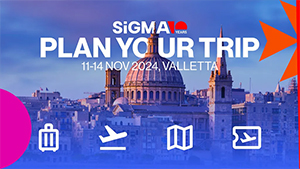
SiGMA Europe: Plan your trip

Visiting Malta for the first time? The Plan Your Trip page on the SiGMA website is designed to help make your stay a breeze. From hotel recommendations to travel tips, we’ve done the research so you don’t have to!

Home to 3 UNESCO World Heritage sites, Malta is widely known for its beautiful cultural landmarks. From ancient standing stones to elaborate Renaissance architecture, the islands pack a rich historical punch. It´s capital, Valletta, has been described by UNESCO as “one of the most concentrated historic areas in the world”, making its city an open air museum packed with incredible views and marvels.

And with so many of our networking events taking place here, it should be your first port of call when it comes to accommodation. Our official partner hotels include the Grand Hotel Excelsior, Iniala Harbor House, Barcelo Hotels and Resorts, AX Hotels, the Marriott Resort Malta, Palazzo Ignazio, Valletta, SO City Hotel, Casa Rosanna, and the Hyatt Centric Malta. Ensure your passport is valid, and be sure to check whether you require a visa to enter the country by checking out the Visa Information section on our website.

Haven’t registered for the event yet? Ticket prices are rising daily – visit our website to secure your spot and explore our popular package options.

Take the scenic route: Getting to SiGMA Europe 2024

We’ve taken all the necessary steps to make your journey to the expo and conference as hassle-free as possible. View directions to the entrance here.

Ferry Shuttle Service

This complimentary ferry shuttle service offers convenient transportation on the 12th, 13th, and 14th of November (running every hour), ensuring a smooth journey to MMH and back. Pick-up points available:

08:00am – 7:00pm: Sliema (in front of McDonald’s)

08:45am – 6:30pm: VCP (Valletta Cruise Port – Waterfront)

Bus Shuttle Service

This complimentary shuttle service offers convenient round-trip transportation on the 12th, 13th, and 14th of November (running every 40 min) between the following locations:

8am – 6:pm: Hotel Excelsior – Valletta to MMH (every 15-30 mins)
8am – 6pm: The Westin Dragonara Resort & Hilton (St Julian’s) to MMH (every 45 mins)
8am – 6pm: Malta Marriott Resort (St Julian’s) to MMH (every 45 mins)
8am – 6pm: Barcelo Fortina (Sliema) to MMH (every 45 mins)

The last pickup time from MMH to all of the above hotels is 6:30 pm.

Activities such as the Teatru ManoelTour and the Harbor Cruise on the 11th includes transportation to and from the Hotel Excelsior. Visit our online agenda for more information.

Popular ride-hailing apps include Bolt and Uber.

Beat the queues

Pre-registration will be available to delegates looking to collect their badge early and beat first day queues. Join us on the 10th from 09:00 to 20:00 at the the La Valette Lounge, Arrivals Hall at the Malta International Airport, and the 11th of November from 7.00 to 22.00 at the Hotel Excelsior Ballroom and the La Valette Lounge, and Have your ticket handy, a digital version is enough and don’t forget to have a form of identification with you. Join the networking drinks and break the ice with fellow delegates from 18.00pm onwards at the Hotel Excelsior Ballroom.

Generate your badge and let other delegates know you’re coming with our online badge generator.

Stay in the know

Don’t miss last minute changes – stay up-to-date with all the latest updates through SiGMA’s official social media channels and the official SiGMA Podcast. Join the official SiGMA Telegram Channel by clicking here.

A new expanded footprint:  Explore 45,000 square metres at the MMH

Held for the second time at the Mediterranean Maritime Hub (MMH), the entire venue spans an incredible 45,000 square metres, breathing new life into a brand new networking space for exhibitors and attendees, with ample quiet spaces and seating areas for uninterrupted meetings. The new expo size still allows attendees to walk the floor comfortably several times per day. The larger venue will provide ample room for attendees to connect, collaborate, and exchange ideas across multiple industries, including a vast outdoor area. New lounges and meeting spaces will allow for meaningful conversations and partnerships, catering to the needs of a diverse array of iGaming professionals, from CEOs and affiliates to investors and startups. A double decker space above the registration tunnel will feature a relaxing chill out zone, while a VIP lounge caters for investors and VCs.

Additional highlight features include a huge custom-built food court, which features a brand new eco design.

More in News

Integrating ESG (Environmental, Social, and Governance) principles into European multi-currency credit solutions is becoming increasingly vital. This shift is driven by regulatory pressures, investor demands, and a growing awareness of the financial risks associated with climate change and social issues. Key Drivers and Trends Regulatory pressures, investor demand, risk mitigation, and reputation management are key drivers shaping the integration of ESG factors into financial institutions' lending practices. The European Union remains at the forefront of sustainable finance regulation, with initiatives such as the EU Taxonomy, the Sustainable Finance Disclosure Regulation (SFDR), and amendments to the Capital Requirements Directive (CRD) compelling financial institutions to incorporate ESG considerations. The European Banking Authority (EBA) has reinforced these efforts by issuing guidelines that mandate the integration of ESG risks into risk management frameworks, particularly in assessing credit risk exposure to climate change and other sustainability-related factors. Investor demand further accelerates this shift, as market participants increasingly prioritize ESG considerations when making investment decisions. This trend has fueled the growth of sustainable financial products, including ESG-linked credit solutions, and has emphasised transparency regarding the ESG performance of lending portfolios. Additionally, incorporating ESG factors into credit risk assessments enables financial institutions to identify and mitigate potential risks of climate change, social inequality, and poor governance. For instance, evaluating a company's carbon footprint allows banks to assess its exposure to transition risks in an evolving low-carbon economy. Beyond compliance and risk management, adopting robust ESG practices enhances an institution’s reputation and strengthens trust with customers and stakeholders. By proactively integrating ESG considerations, financial institutions can align with regulatory expectations, meet investor demands, and build long-term resilience in an increasingly sustainability-driven financial landscape. Key Developments Financial institutions are increasingly integrating ESG ratings and data providers into their assessment frameworks to evaluate the sustainability performance of their clients. A notable trend in this space is the rise of ESG-linked loans, where interest rates are directly tied to a borrower's ESG performance, incentivising sustainable business practices. Additionally, the European Banking Authority (EBA) is establishing guidelines that serve as a foundation for how banks across Europe will be required to manage ESG risks within their credit solutions, shaping the future of sustainable finance. Integrating ESG principles into multi-currency credit solutions is a complex but essential process for European financial institutions. It requires a holistic approach considering regulatory requirements, investor demands, and the need to mitigate ESG-related risks. As the sustainable finance landscape evolves, financial institutions that effectively integrate ESG factors will be better positioned to thrive in the long term. ...Read more
Digital transformation changes companies' operations and interactions with customers. By leveraging technology to boost efficiency and enhance customer experiences, organizations can remain competitive, respond to evolving demands, and discover new opportunities for growth and innovation in an increasingly digital world. Enhancing Operational Efficiency One of the most significant benefits of digital transformation is its ability to streamline internal processes. Manual and paper-based systems often lead to delays, errors, and inefficiencies that stall business growth. Digital tools like cloud computing, automation, and data analytics enable organizations to operate more smoothly by minimizing redundancy and improving accuracy. Automating repetitive tasks reduces employees' workloads, allowing them to focus on more strategic initiatives. Data analytics plays a key role in decision-making by providing insights that help predict market trends, identify customer preferences, and track real-time performance metrics. These efficiencies cut costs and boost productivity, making scaling easier for businesses. Digital transformation also enhances collaboration within teams. Communication platforms and project management tools allow employees to collaborate seamlessly across different departments or geographies. This interconnectedness promotes a culture of transparency and agility, enabling businesses to adjust more quickly to changing market demands. Improving Customer Experience and Engagement Customer expectations have shifted dramatically in a digital-first world. People seek personalized, fast, and seamless experiences across multiple touchpoints. Digital transformation allows businesses to satisfy these expectations by leveraging technology to better understand, engage, and serve their customers. Companies can gather detailed data on purchasing habits, preferences, and feedback through customer relationship management systems. This information helps tailor products, services, and communications to fit individual needs. Artificial intelligence and machine learning enhance this personalization by predicting behaviour and offering real-time suggestions. Another important aspect is the omnichannel experience. Consumers now interact with businesses through various platforms, websites, mobile apps, social media, and more. A strong digital infrastructure ensures a consistent and unified experience across all these channels, strengthening brand trust and loyalty. Digital tools enable quicker response times and better customer support. Chatbots, for example, offer instant assistance, while feedback loops help companies swiftly improve their services. This responsiveness improves satisfaction and increases the likelihood of repeat business and referrals. Digital transformation creates opportunities for entering new markets and reaching different customer segments. Through digital marketing strategies and e-commerce platforms, businesses can extend their reach beyond traditional boundaries. These digital channels provide valuable insights into market performance and customer behaviour, empowering enterprises to refine their strategy continuously. ...Read more
FREMONT, CA : The European e-commerce market has experienced remarkable growth in recent years, driven by expanding internet access and evolving consumer preferences. As online shopping becomes increasingly prevalent, consumers demand seamless and efficient delivery experiences. In response, European retailers and logistics providers are adopting advanced technologies and innovative strategies to optimise delivery processes, ushering in a new era of frictionless fulfilment. Innovations Driving Frictionless Delivery in Europe The logistics landscape in Europe is evolving rapidly, with key innovations enhancing efficiency, sustainability, and customer convenience. Autonomous delivery vehicles are transforming the industry with cutting-edge technologies. Companies are deploying autonomous robots capable of navigating sidewalks and roads to deliver small packages directly to customers’ doorsteps. These self-driving solutions eliminate the need for human drivers and significantly reduce delivery times. Similarly, drone delivery services pioneered by organisations are transforming last-mile delivery. These unmanned aerial vehicles efficiently transport packages to remote areas and urban centres, bypassing traffic congestion and traditional logistical hurdles. Locker and parcel pickup points offer greater flexibility for consumers. Retailers and logistics providers are expanding parcel lockers and self-service pickup point networks in supermarkets and gas stations. These stations enable customers to collect packages at their convenience, enhancing accessibility. Additionally, real-time tracking technologies provide customers accurate delivery updates, reducing uncertainty and improving satisfaction. Click-and-collect services bridge the gap between online and physical retail. In-store pickup options allow customers to order items online and retrieve them from a nearby store, offering an ideal solution for time-sensitive purchases like groceries or electronics. Meanwhile, curbside pickup services deliver a seamless, contactless experience, allowing customers to collect their orders directly from their vehicles, saving time and enhancing safety. The integration of AI and Machine Learning further optimises delivery processes. AI-driven algorithms streamline routing by analysing real-time traffic data and other variables, minimising fuel consumption and delays. Predictive analytics enable retailers to forecast customer demand and manage inventory efficiently, ensuring products are available when needed while avoiding stockouts or overstocking. Sustainable delivery practices are at the forefront of European logistics innovation. Retailers and logistics providers embrace eco-friendly solutions, such as electric delivery vehicles, optimised packaging, and route planning to reduce carbon emissions. Some companies commit to carbon-neutral delivery through investments in renewable energy and carbon credit programs, setting a benchmark for environmentally responsible operations. Ongoing technological advancements and innovative solutions shape the future of delivery in Europe. As consumer expectations evolve, retailers and logistics providers must proactively adapt by implementing seamless delivery strategies. By harnessing AI, automation, and sustainable practices, the European logistics sector can achieve exceptional levels of convenience and speed for customers while significantly reducing its environmental footprint. ...Read more
With its diverse markets and stringent data protection regulations (GDPR), Europe presents a unique landscape for big data innovation. Businesses across the continent increasingly leverage data analytics to gain competitive advantages, predict market trends, and deliver personalised customer experiences. The European Big Data Landscape A robust regulatory framework, diverse industry adoption, and a growing emphasis on artificial intelligence, machine learning, and sustainability shape Europe's big data ecosystem. The General Data Protection Regulation (GDPR) has set a global benchmark for data privacy, compelling businesses to implement stringent data governance measures that enhance data quality and drive responsible innovation. Across industries—from manufacturing and pharmaceuticals to finance and retail—big data plays a transformative role in optimising operations and decision-making. Cloud-based solutions further accelerate this shift, making advanced data analytics more accessible to companies of all sizes. Moreover, European businesses increasingly leverage data to align with sustainability goals, using analytics to optimise resource consumption and reduce environmental impact in line with the EU’s Green Deal. Predicting Trends with Big Data in Europe Big data enables European companies to anticipate market trends, mitigate risks, and identify emerging opportunities. In retail, companies like Zalando utilise historical sales data, social media trends, and weather patterns to forecast demand, optimising inventory management and minimising waste. Supermarkets, in turn, analyse real-time sales and loyalty program data to predict fluctuations in demand for perishable goods. Banks and insurers employ big data analytics in the financial sector to assess credit risk, detect fraudulent activities, and forecast market volatility. At the same time, fintech firms use machine learning algorithms to enhance security and compliance. Similarly, manufacturers rely on sensor data to monitor production performance, predict maintenance needs, and streamline logistics, with companies like DHL leveraging real-time tracking and predictive analytics to optimise delivery routes. Meanwhile, organisations harness social media data, search trends, and online reviews to gauge consumer sentiment and identify evolving market dynamics. Smart meter data informs demand forecasting and grid management in the energy sector. At the same time, cities integrate sensor data to enhance urban sustainability by monitoring air quality, traffic patterns, and waste management. Enhancing Customer Experience with Big Data European businesses also leverage big data to refine customer engagement, personalise services, and strengthen relationships. E-commerce platforms such as ASOS analyse browsing history, purchase behaviour, and demographics to offer tailored product recommendations while streaming giants like Spotify and Netflix curate content based on user preferences. Targeted marketing has become increasingly data-driven, with companies segmenting audiences and utilising location-based analytics to deliver real-time personalised promotions. In customer service, AI-powered chatbots and virtual assistants enhance response efficiency, while sentiment analysis helps call centres proactively identify and address customer concerns. The healthcare sector is also undergoing a data-driven transformation, with providers personalising treatment plans based on patient data from wearable devices and remote monitoring systems. Furthermore, businesses refine loyalty programs through advanced analytics, ensuring rewards and incentives align with customer behaviours and preferences. The latest trends in data management reflect a shift toward more agile, intelligent, and sustainable practices. Companies increasingly adopt Data Mesh Architecture, a decentralised approach that enhances data accessibility and operational efficiency. Simultaneously, AI-powered automation is accelerating, with machine learning and artificial intelligence streamlining data analysis and decision-making processes. The rise of edge computing underscores the need for real-time data processing, bringing computation closer to the source to enhance speed and efficiency. Furthermore, data sharing and collaboration are gaining traction across industries, fostering innovation and addressing complex societal challenges. Sustainable data practices are becoming a priority as organisations seek to minimise the environmental impact of data storage and processing through energy-efficient infrastructure and responsible resource management. Big data transforms European businesses by enabling them to predict trends, enhance customer experiences, and drive innovation. By addressing the challenges and embracing the opportunities, European companies can leverage the power of data to gain a sustainable competitive advantage in the global marketplace. ...Read more
Top
