

PlanB.
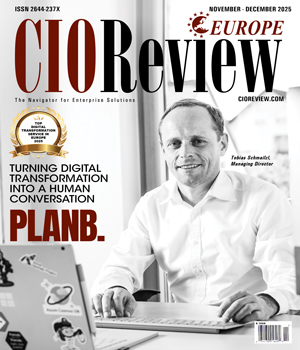
Turning Digital Transformation into a Human Conversation

 Tobias Schmailzl, Managing Director
For PlanB., one of Germany’s most forward leading Microsoft consultancies, the discussion has moved well beyond cloud migration or modern workplace integration. In 2025, enterprises are asking a deeper question: how can they harness AI at the core of their Microsoft ecosystem in a way that keeps operations secure, transparent, and uninterrupted?
PlanB. has earned a reputation as a first mover in enterprise AI. The company is not waiting for the AI revolution to arrive; it is building the methods & tools that will sustain it. From deploying Microsoft 365 Copilot across complex organizations to engineering secure, scalable environments for agentic AI systems, PlanB. helps clients change how work gets done so they can turn automation into artificial autonomy and data into insight.
“We’ve always understood ourselves as first movers of technology,” says Tobias Schmailzl, managing director. “If you look back at digital transformation over the last five or seven years, it is clear that the real value still lies ahead, especially now as AI reshapes nearly every business function.”
The AI-first consultancy
That first-mover philosophy defines PlanB.’s market position. The company does not simply implement technology; it co-creates solutions with its clients. Through what it calls co-innovation, PlanB. connects Microsoft’s most advanced capabilities with the specific operational realities of enterprise customers.
AI is transforming every aspect of how enterprises operate, but the real value comes from translating disruption into opportunity in a way that is secure, transparent, and paced to each client.
Every engagement, whether it involves Azure architecture, Copilot deployment, or AI governance frameworks, begins with one premise: technology only creates value when it improves the way people work.
Enabling Clients to Transform Existing Workflows
PlanB. has made decisive progress in developing its enterprise-wide AI strategy. Building on its established expertise in AI, Cloud Architecture, and Cybersecurity, the PlanB. AI Enablement Platform was conceived as a holistic business and solution architecture and successfully introduced to the market.
This platform is not a product but a service concept that empowers companies to operate their own AI systems securely, scalably, and in full compliance with regulations. It combines methodological, organizational, and technical elements into an integrated architecture for Agentic AI Operations. In doing so, PlanB. helps its clients adopt AI and embed it sustainably into their business processes.
The AI Enablement Platform serves as a framework and governance layer for the safe deployment of generative and agent-based AI systems. It enables the creation of individual AI ecosystems based on open standards (e.g., MCP and A2A) and ensures that AI applications are always transparent, auditable, and compliant with the regulations like the EU AI Act.
Within this architecture, the Agentic AI Framework forms the central orchestration mechanism: autonomous, context-aware agents can independently plan, make decisions, and coordinate processes across multiple systems. This technical foundation is the basis for Agentic AI as a service, enabling PlanB. clients to transform existing workflows into proactive, self-managing systems.
The Backbone of PlanB.’s Strategy
Complementing this, the Productivity Frontier initiative was launched during the fiscal year. It represents the operational extension of the Agentic AI strategy and focuses on the application layer of Applied AI. While the Agentic AI team focuses on scalable and integrated enterprise AI, the Productivity Frontier brings AI into everyday work particularly through Microsoft 365 Copilot, Power Platform, and automation solutions.
The goal of the Productivity Frontier is to make intelligent productivity accessible to people and processes. It translates technological innovations from the Agentic AI domain into tangible benefits for users, teams, and organizations. In doing so, PlanB. bridges the strategic gap between technological enablement and operational value, creating a true link between AI innovation and productivity gains.
Together, these two pillars—the AI Enablement Platform as Business Reference Architecture and the Productivity Frontier—form the backbone of PlanB.’s strategy for implementing Applied and Agentic AI from small businesses to global enterprises. While the AI Enablement Platform is designed for deeply integrated custom enterprise AI solutions, the Productivity Frontier delivers concrete value in day-to-day operations and significantly accelerates project timelines through the reuse of standardized architectural components.
By combining architectural excellence with practical implementation expertise, PlanB. has established a unique market position. The focus remains firmly on governance, security, and sustainable value creation, not on building products, but on enabling AI capability as a service.
Co-innovation, not outsourcing
For PlanB., transformation is a partnership. The company built its business on a simple conviction that technology alone cannot deliver progress unless people shape and refine it through co-innovation.
In practice, PlanB. does more than roll out Microsoft technologies; it helps clients reimagine how those tools work inside their own ecosystems. Whether embedding Copilot to boost personal productivity or developing agentic AI architectures that automate decision-making, the firm works side by side with clients to design solutions that fit, scale, and adapt.
This collaborative approach sets PlanB. apart from traditional consultancies that often hand innovation off once the code is written. At PlanB., innovation remains a shared process among the company’s architects, Microsoft engineers, and enterprise leaders. The outcome is technological modernization coupled with cultural readiness: teams that understand, trust, and actively participate in the systems that shape their daily work.
The AI Factory brings this philosophy to life. As PlanB.’s fastest-growing practice and the centerpiece of its transformation model, the AI Factory lets organizations prototype, deploy, and govern AI workloads at enterprise scale. Use Cases developed on the AI Enablement Platform can move fast and generate value, because they tackle the two critical blockers for AI applications: access to enterprise knowledge where it is, and sharing already implemented intelligent core functionality.
The AI Enablement Platform supports enterprises in removing those blockers from their AI journey with an integration layer that acts as the central backbone for data ingestion and agent orchestration. Therefore, the integration layer provides the technical and methodological baseline for enterprise AI.
“That’s why we built the AI Enablement Platform to do more than just connect systems – it’s designed to accelerate value creation by removing the two biggest blockers in enterprise AI: fragmented knowledge and isolated intelligence. The integration layer is not just infrastructure. It’s the foundation for scalable, orchestrated AI across the enterprise.’’ says Florian Schmid, Head of AI at PlanB.
CIOs gain a rare benefit: rapid innovation without loss of oversight. Governance and compliance are embedded in every layer of the AI Factory, giving clients confidence that their AI systems operate transparently and securely.
That focus on responsible innovation ties directly to the company’s Microsoft heritage. As a long-standing Microsoft Solutions Partner, PlanB. has spent many years mastering Azure, M365, and Power Platform. By combining Microsoft’s infrastructure with its own innovation frameworks, PlanB. provides a future-ready environment where human creativity and artificial intelligence work together.
Turning AI into a manageable reality
AI promises a great deal but it also introduces complexity. Many companies start with enthusiasm and end in confusion when pilots fail to scale, data policies fall behind, and security risks multiply across new use cases.
PlanB. has built a business around taming that complexity. One enterprise client came to the firm worried that multiplying AI agents in their ecosystem would erode their ability to govern those agents.
PlanB.’s answer was not a single product. The firm designed a layered architecture that included security baselines, governance frameworks, and a robust agent registry to track and manage AI systems across departments. The team also implemented a human-in-the-loop model so humans retained supervisory control even in highly automated workflows.
The result was cultural change. Employees began to view AI as a transparent, accountable partner in daily decision-making rather than a mysterious black box.
Technology that knows its place
PlanB. has earned credibility through a disciplined view of where technology belongs in a business. Its foundation on Microsoft Azure provides the tools to build powerful, flexible infrastructures, yet clients appreciate the restraint with which those tools are applied. The company avoids novelty for its own sake and instead builds what Schmailzl calls a technology spine that meets today’s AI demands while remaining stable for the long term.
PlanB.’s engineers work across cloud, edge, and on-premise environments and they unify these contexts with Kubernetes and distributed runtime tooling so management remains consistent regardless of workload location. This architectural fluency enables solutions that scale smoothly across continents and comply with different regulatory environments.
That quiet approach to innovation wins loyalty through reliability rather than headlines.
Security as a design principle
No transformation is complete without cybersecurity, and for PlanB. security is never an afterthought. Much of the company’s recent growth comes from enterprises seeking an integrated approach to security.
PlanB. treats cybersecurity as a design principle rather than a defensive add-on. Its experts build systems aligned with NIST and CIS frameworks and they combine preventive architecture with continuous monitoring. Rather than stacking security tools on top of applications, PlanB. weaves protection into development and deployment processes.
This philosophy extends to data protection and compliance. PlanB. helps organizations align governance with business strategy and often uses Microsoft Purview Information Protection to identify, classify, and secure sensitive data so every document and dataset receives a digital fingerprint.
The goal is preparedness, not paranoia. In a world of constant risk, readiness is the most practical form of innovation.
The cloud that changed everything
Ask PlanB. which factor transformed business most over the past decade and the company answers without hesitation: the cloud. Even so, PlanB. does not treat cloud adoption as a checkbox. For the firm, cloud migration is an opportunity to rethink how organizations operate.
Technology firms often talk about innovation as if it were a product. At PlanB., innovation is a culture. In the company’s offices you will not find isolated groups of developers and strategists. You will see teams that mix marketing, engineering, and user experience specialists in the same spaces to encourage curiosity and cross-pollination.
“Building excellence requires cultivating a culture that nurtures curiosity, empathy, and equality,” says Schmailzl. “This is the core of our enterprise and the foundation on which innovation thrives.”
This emphasis on culture has practical effects. It enables PlanB. to attract and retain people who think in systems rather than silos, people who are as comfortable discussing Kubernetes as they are debating user behavior. It also shapes how PlanB. collaborates with clients. The company acts as a creative partner whose success is measured by the confidence clients gain to innovate independently.
Preparing clients for an AI-first future
As AI evolves, PlanB. is expanding its role as an AI enablement partner. Close collaboration with Microsoft’s Azure AI team gives the company early access to tools and frameworks that many organizations are only beginning to explore.
Most important, Florian Schmid says, is how technology is introduced rather than the technology itself.
“AI is transforming every aspect of how enterprises operate, but the real value comes from translating disruption into opportunity in a way that is secure, transparent, and paced to each client,” he explains.
That measured ambition explains why PlanB. remains relevant in a field that changes weekly. For every breakthrough the company delivers, it matches that achievement with governance, ethics, and real-world usability.
In a world fascinated by the next big thing, PlanB. has built a business around staying power. Its journey mirrors that of its clients, from cloud transformation to AI enablement and from digital readiness to digital maturity. Through every phase, one belief remains constant: technology should amplify human potential rather than replace it.
“That’s why we built the AI Enablement Platform to do more than just connect systems – it’s designed to accelerate value creation by removing the two biggest blockers in enterprise AI: fragmented knowledge and isolated intelligence. The integration layer is not just infrastructure. It’s the foundation for scalable, orchestrated AI across the enterprise.’’ says Florian Schmid, Head of AI at PlanB.
-
We’ve always understood ourselves as first movers of technology.
CIOs gain a rare benefit: rapid innovation without loss of oversight. Governance and compliance are embedded in every layer of the AI Factory, giving clients confidence that their AI systems operate transparently and securely.
That focus on responsible innovation ties directly to the company’s Microsoft heritage. As a long-standing Microsoft Solutions Partner, PlanB. has spent many years mastering Azure, M365, and Power Platform. By combining Microsoft’s infrastructure with its own innovation frameworks, PlanB. provides a future-ready environment where human creativity and artificial intelligence work together.
Turning AI into a manageable reality
AI promises a great deal but it also introduces complexity. Many companies start with enthusiasm and end in confusion when pilots fail to scale, data policies fall behind, and security risks multiply across new use cases.
PlanB. has built a business around taming that complexity. One enterprise client came to the firm worried that multiplying AI agents in their ecosystem would erode their ability to govern those agents.
PlanB.’s answer was not a single product. The firm designed a layered architecture that included security baselines, governance frameworks, and a robust agent registry to track and manage AI systems across departments. The team also implemented a human-in-the-loop model so humans retained supervisory control even in highly automated workflows.
The result was cultural change. Employees began to view AI as a transparent, accountable partner in daily decision-making rather than a mysterious black box.
Technology that knows its place
PlanB. has earned credibility through a disciplined view of where technology belongs in a business. Its foundation on Microsoft Azure provides the tools to build powerful, flexible infrastructures, yet clients appreciate the restraint with which those tools are applied. The company avoids novelty for its own sake and instead builds what Schmailzl calls a technology spine that meets today’s AI demands while remaining stable for the long term.
PlanB.’s engineers work across cloud, edge, and on-premise environments and they unify these contexts with Kubernetes and distributed runtime tooling so management remains consistent regardless of workload location. This architectural fluency enables solutions that scale smoothly across continents and comply with different regulatory environments.
That quiet approach to innovation wins loyalty through reliability rather than headlines.
Security as a design principle
No transformation is complete without cybersecurity, and for PlanB. security is never an afterthought. Much of the company’s recent growth comes from enterprises seeking an integrated approach to security.
PlanB. treats cybersecurity as a design principle rather than a defensive add-on. Its experts build systems aligned with NIST and CIS frameworks and they combine preventive architecture with continuous monitoring. Rather than stacking security tools on top of applications, PlanB. weaves protection into development and deployment processes.
This philosophy extends to data protection and compliance. PlanB. helps organizations align governance with business strategy and often uses Microsoft Purview Information Protection to identify, classify, and secure sensitive data so every document and dataset receives a digital fingerprint.
The goal is preparedness, not paranoia. In a world of constant risk, readiness is the most practical form of innovation.
The cloud that changed everything
Ask PlanB. which factor transformed business most over the past decade and the company answers without hesitation: the cloud. Even so, PlanB. does not treat cloud adoption as a checkbox. For the firm, cloud migration is an opportunity to rethink how organizations operate.
Technology firms often talk about innovation as if it were a product. At PlanB., innovation is a culture. In the company’s offices you will not find isolated groups of developers and strategists. You will see teams that mix marketing, engineering, and user experience specialists in the same spaces to encourage curiosity and cross-pollination.
“Building excellence requires cultivating a culture that nurtures curiosity, empathy, and equality,” says Schmailzl. “This is the core of our enterprise and the foundation on which innovation thrives.”
This emphasis on culture has practical effects. It enables PlanB. to attract and retain people who think in systems rather than silos, people who are as comfortable discussing Kubernetes as they are debating user behavior. It also shapes how PlanB. collaborates with clients. The company acts as a creative partner whose success is measured by the confidence clients gain to innovate independently.
Preparing clients for an AI-first future
As AI evolves, PlanB. is expanding its role as an AI enablement partner. Close collaboration with Microsoft’s Azure AI team gives the company early access to tools and frameworks that many organizations are only beginning to explore.
Most important, Florian Schmid says, is how technology is introduced rather than the technology itself.
“AI is transforming every aspect of how enterprises operate, but the real value comes from translating disruption into opportunity in a way that is secure, transparent, and paced to each client,” he explains.
That measured ambition explains why PlanB. remains relevant in a field that changes weekly. For every breakthrough the company delivers, it matches that achievement with governance, ethics, and real-world usability.
In a world fascinated by the next big thing, PlanB. has built a business around staying power. Its journey mirrors that of its clients, from cloud transformation to AI enablement and from digital readiness to digital maturity. Through every phase, one belief remains constant: technology should amplify human potential rather than replace it.
| Share this Article: Tweet |
Company
PlanB.
Management
Tobias Schmailzl, Managing Director
Description
PlanB. is a Microsoft-focused digital transformation partner helping enterprises navigate the shift to AI with secure, cloud-native, and human-centered solutions. Through co-innovation and its AI Factory, it empowers organizations to modernize confidently while maintaining governance, agility, and trust.
Top
