

Secure ITAD
Engineering the Future of Data Destruction
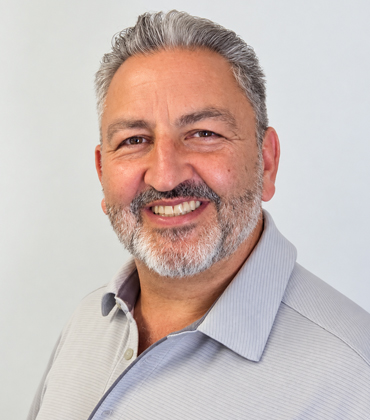 Garry Costen, Group CEO
That thinking shaped Secure ITAD from the outset. Founded in 2014 with data security at the centre of its business, the company chose not simply to rely on off-the-shelf technology, but to develop equipment around the demands of its customers. One of its early innovations was a purpose-built data-wiping machine capable of processing 96 hard drives simultaneously, followed by the development of its first hard drive shredding machine.
Today, the clearest expression of that philosophy is HD Maximus.
HD Maximus: Built For Modern Data Destruction
Designed for enterprise, hyperscale and data-centre environments, HD Maximus is Secure ITAD’s purpose-built, high-throughput mobile shredding platform for hard drives, SSDs and other data-bearing media.
As storage capacities increase and organisations retire greater volumes of infrastructure, conventional destruction processes can become a bottleneck. Secure ITAD developed HD Maximus to take industrial-scale destruction directly to the client, enabling sensitive media to be physically destroyed on-site.
Costen describes HD Maximus as ‘the world’s most powerful mobile shredding solution’, developed specifically to meet the demands of increasingly dense storage media and large-volume destruction projects.
For Secure ITAD, it represents a wider principle—if the right solution does not exist, build it.
That engineering capability sits within a broader ITAD operation spanning the UK and Europe. Secure ITAD’s UK and German operations provide data-centre decommissioning, secure data destruction, asset processing and remarketing, while also supporting global ITAD providers requiring experienced local delivery capability.
Decommissioning Without Disrupting Operations
Data-centre retirement is rarely as simple as disconnecting and removing equipment. Power, communications, access routes and live infrastructure all have to be considered.
On one project, Secure ITAD was tasked with removing three racks from an eight-rack live data centre. The team discovered that equipment remaining in operation was drawing power through one of the racks scheduled for removal. Secure ITAD rerouted the power and adjusted the configuration, allowing the remaining infrastructure to continue operating throughout the project.
Security, Traceability and Value Recovery
Following decommissioning, assets are transported to Secure ITAD’s UK or German facilities, where every item is serialised, recorded and tracked. Clients receive live portal visibility as equipment progresses through the programme.
Data-bearing assets are segregated into restricted red-zone areas before secure erasure or physical destruction. The initial processing and certification phase generally takes 20 working days, followed by a further 20 working days for remarketing, resale and financial settlement.
Assets suitable for reuse move through testing and grading, with viable equipment repaired where practical. Rather than treating remarketing as a bulk-disposal exercise, Secure ITAD actively identifies opportunities to maximise residual value through component recovery, smaller sales batches and its global buyer network.
Where client policy permits, secure erasure and reuse are prioritised, extending equipment life before responsible recycling becomes necessary.
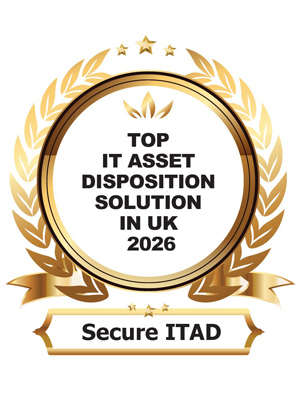
This combination of engineering, data security, technical capability, traceability and value recovery underpins Secure ITAD’s recognition as the Top IT Asset Disposition Solution in UK 2026.
-
If the right solution doesn’t exist, we build it. HD Maximus reflects how we engineer around the security demands of modern ITAD.
For Secure ITAD, it represents a wider principle—if the right solution does not exist, build it.
That engineering capability sits within a broader ITAD operation spanning the UK and Europe. Secure ITAD’s UK and German operations provide data-centre decommissioning, secure data destruction, asset processing and remarketing, while also supporting global ITAD providers requiring experienced local delivery capability.
Decommissioning Without Disrupting Operations
Data-centre retirement is rarely as simple as disconnecting and removing equipment. Power, communications, access routes and live infrastructure all have to be considered.
On one project, Secure ITAD was tasked with removing three racks from an eight-rack live data centre. The team discovered that equipment remaining in operation was drawing power through one of the racks scheduled for removal. Secure ITAD rerouted the power and adjusted the configuration, allowing the remaining infrastructure to continue operating throughout the project.
Security, Traceability and Value Recovery
Following decommissioning, assets are transported to Secure ITAD’s UK or German facilities, where every item is serialised, recorded and tracked. Clients receive live portal visibility as equipment progresses through the programme.
Data-bearing assets are segregated into restricted red-zone areas before secure erasure or physical destruction. The initial processing and certification phase generally takes 20 working days, followed by a further 20 working days for remarketing, resale and financial settlement.
Assets suitable for reuse move through testing and grading, with viable equipment repaired where practical. Rather than treating remarketing as a bulk-disposal exercise, Secure ITAD actively identifies opportunities to maximise residual value through component recovery, smaller sales batches and its global buyer network.
Where client policy permits, secure erasure and reuse are prioritised, extending equipment life before responsible recycling becomes necessary.
This combination of engineering, data security, technical capability, traceability and value recovery underpins Secure ITAD’s recognition as the Top IT Asset Disposition Solution in UK 2026.
What ITAD Buyers Should Demand Beyond Asset Collection
Retiring enterprise hardware becomes difficult when collection, data control, reporting and recovery value are treated as separate handoffs. A provider may be able to remove equipment quickly yet still leave gaps in the chain of custody, access control, destruction records or the handling of assets that retain resale value. The buying decision, therefore, turns less on pickup capacity than on how consistently a provider can control equipment from site exit through final disposition.
Data security should be examined through a process rather than claims. Buyers need to know when assets are identified as data-bearing, where they are held, who can access them and how erasure or destruction is documented. The distinction matters as disposition routes can diverge after collection. Some drives may be suitable for certified erasure and reuse, while others may require physical destruction under a client’s internal policy. A provider should be able to support those different instructions without weakening traceability.
Reporting also deserves close scrutiny. Asset-level records, serial numbers, job numbers and destruction certificates are useful only when they correspond clearly to the equipment removed and the job under which it was processed. Portal access can strengthen oversight when status changes appear as assets are received and processed, rather than after the job is closed.
“Secure ITAD handles data centre exits with its own personnel and equipment, backed by about 15 years of decommissioning experience.”
Decommissioning depth becomes more important when assets sit inside live data centres rather than ordinary office environments. Removing racks can involve power isolation, communications dependencies, access controls and a carefully planned route out of the building. Experience with those conditions matters as the work may affect equipment that is staying in service. Buyers should examine whether a provider has the personnel and equipment to manage complex exits rather than subcontracting the difficult portions without clear accountability.
Turnaround commitments also need to reflect the full process, including intake and final settlement, rather than stopping once hardware reaches a processing facility. Service-level expectations should account for the time required to process data-bearing assets before resale activity begins.
The economics of disposition create another tradeoff. Bulk resale can shorten the sales cycle but may sacrifice recovery value, particularly when equipment has usable components or a stronger demand in smaller lots. A provider’s remarketing model should show how testing, grading, repair and resale decisions are made before assets are written off for recycling.
Reuse also changes the environmental picture. Hardware that still has a viable second market can remain in service longer, while damaged equipment may yield parts that support repairs elsewhere. Recycling should remain a controlled final route for equipment that cannot reasonably be reused or repaired, with downstream partners subject to clear handling standards. Buyers should also understand how revenue sharing and settlement are handled once resale is complete.
Secure ITAD decommissions equipment and records each asset in a live client portal. Data-bearing hardware is separated for controlled processing at its UK and Germany facilities, where the workflow supports certified erasure or physical destruction. Secure ITAD handles data centre exits with its personnel and equipment, backed by 15 years of decommissioning experience.
Its remarketing process favours smaller batches and component recovery when that can improve financial return, while unusable material is passed to specialist recycling partners. That service model keeps data control connected to asset accountability while preserving the opportunity for recovery value. For buyers comparing ITAD providers, Secure ITAD merits consideration in a formal evaluation.
...Read more
| Share this Article: Tweet |
Company
Secure ITAD
Management
Garry Costen, Group CEO
Description
Secure ITAD combines engineering-led data destruction and erasure, data-centre decommissioning, asset tracking, remarketing and responsible recycling across the UK and Europe, with the HD Maximus showcasing its approach to high-volume, secure mobile data destruction.
Top
