×

CIOReview Europe Weekly Brief
Be first to read the latest tech news, Industry Leader's Insights, and CIO interviews of medium and large enterprises exclusively from CIOReview Europe
This article is part of CIOReview's Innovation Insights series featuring expert contributions nominated by our subscribers and reviewed by our editorial team.
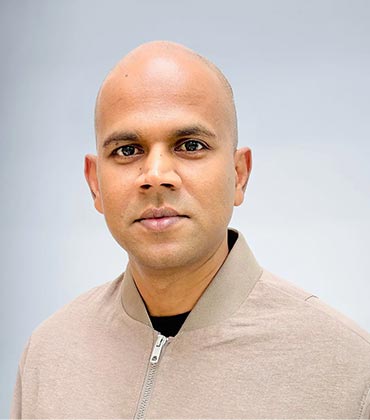
HR Leaders are the Missing Link in AI Strategy
Earlier in my career, I launched what I believed was transformative employee experience technology for our workforce. Despite solid architecture and an intuitive, thoughtful experience, adoption was nearly zero. So, I went to the floor and listened. Employees didn't see the personal benefit. Managers and leaders didn't trust where the data was coming from to make employment decisions and wanted more control.
Every concern was valid, and everyone could have been addressed had HR been a co-architect from day one rather than a customer at the end of it. The technology didn't fail, the partnership model did. That lesson underscores what I believe is our defining workforce challenge today: we are deploying AI faster than we are preparing people for it. The gap between the two is simultaneously a CIO and a CHRO problem and neither function fully owns it at a cost greater than most organisations realise.
The AI Shortfall
New workforce-readiness research Cornerstone conducted in partnership with Vanson Bourne surveying 2,000 IT decision-makers, HR leaders and employees across eight global markets gives a clear picture of where organisations stand. Nearly two-thirds of leaders reported a high level of organisational change over the last 12 months and looking forward, 69% expect that pace to continue driven primarily by AI tools transforming how we work.
Yet only 17% of employees feel completely prepared for how their role will evolve. Sixty percent describe their organisation's approach to skills development as reactive, and while 58% are personally learning new skills, only 39% receive organisational support to do so. The tools are not the problem. Organisations are investing in AI, but adoption still struggles and outcomes still lag, because we keep failing to put humans at the center a failure that sits squarely between IT and HR.
Only 35% of organisations make AI and automation decisions jointly between the two functions. The consequences are measurable: skills gaps go unaddressed for too long (50%), hiring and redeployment decisions are delayed (44%), productivity targets are missed (41%). These are business performance failures and they stem from a structural disconnect that neither function can solve alone.
Context Builds Intelligence
What I have learned building AI systems is that the model is not the intelligence. The model provides the reasoning capability, but the quality of that reasoning depends on the context underneath it and that context is scattered. It sits in HR systems, IT systems, operational platforms and collaboration tools, because people generate signals wherever they work. HR holds a large share of it: role histories, learning records, performance signals, career aspirations, succession data. IT holds the systems, the pipelines and the deployment surface. Neither view is complete on its own, and in most organisations the two are still not wired together.
The deeper gap though is not people data at all it is work. HR describes jobs, Learning describes skills, Operations describes processes and Technology describes systems. Each of those views is accurate and valuable but only read together do they tell us what work is actually being performed, what capability it requires, who has demonstrated it and what outcomes they produced. Every system knows something. No system knows enough. So, when a CEO asks whether we can execute a strategy, we end up reconstructing the answer from fragments job titles, profiles, assessments, self-declared skills, manager observations when the strongest evidence of capability sits in the work people actually perform.
Every concern was valid, and everyone could have been addressed had HR been a co-architect from day one rather than a customer at the end of it. The technology didn't fail, the partnership model did. That lesson underscores what I believe is our defining workforce challenge today: we are deploying AI faster than we are preparing people for it. The gap between the two is simultaneously a CIO and a CHRO problem and neither function fully owns it at a cost greater than most organisations realise.
The AI Shortfall
New workforce-readiness research Cornerstone conducted in partnership with Vanson Bourne surveying 2,000 IT decision-makers, HR leaders and employees across eight global markets gives a clear picture of where organisations stand. Nearly two-thirds of leaders reported a high level of organisational change over the last 12 months and looking forward, 69% expect that pace to continue driven primarily by AI tools transforming how we work.
Yet only 17% of employees feel completely prepared for how their role will evolve. Sixty percent describe their organisation's approach to skills development as reactive, and while 58% are personally learning new skills, only 39% receive organisational support to do so. The tools are not the problem. Organisations are investing in AI, but adoption still struggles and outcomes still lag, because we keep failing to put humans at the center a failure that sits squarely between IT and HR.
Only 35% of organisations make AI and automation decisions jointly between the two functions. The consequences are measurable: skills gaps go unaddressed for too long (50%), hiring and redeployment decisions are delayed (44%), productivity targets are missed (41%). These are business performance failures and they stem from a structural disconnect that neither function can solve alone.
Context Builds Intelligence
What I have learned building AI systems is that the model is not the intelligence. The model provides the reasoning capability, but the quality of that reasoning depends on the context underneath it and that context is scattered. It sits in HR systems, IT systems, operational platforms and collaboration tools, because people generate signals wherever they work. HR holds a large share of it: role histories, learning records, performance signals, career aspirations, succession data. IT holds the systems, the pipelines and the deployment surface. Neither view is complete on its own, and in most organisations the two are still not wired together.
The deeper gap though is not people data at all it is work. HR describes jobs, Learning describes skills, Operations describes processes and Technology describes systems. Each of those views is accurate and valuable but only read together do they tell us what work is actually being performed, what capability it requires, who has demonstrated it and what outcomes they produced. Every system knows something. No system knows enough. So, when a CEO asks whether we can execute a strategy, we end up reconstructing the answer from fragments job titles, profiles, assessments, self-declared skills, manager observations when the strongest evidence of capability sits in the work people actually perform.
Which is why the answer is not another skills taxonomy. It is a shared language of work domain, work, task and skill where the task is the connective unit that links the work being done to the skills it requires, the people performing it and the results produced. Without that shared meaning, HR and IT describe the same workforce in two languages and AI inherits the confusion.
We run this way internally at Cornerstone. Our HR team is our customer zero, co-designing the products and feeding real use back into development, and our business leaders shape it just as much. When we launch a product, a sales leader can ask which of our people are best placed to take it to a particular set of opportunities, where the readiness gaps sit, and what it would take to close them before the quarter starts. Because that answer is built from demonstrated work rather than reputation or proximity, it consistently surfaces people who would otherwise have been overlooked. None of this happens without a shared data strategy, though. The most common failure I see is not technical but governance, and it is rarely one function's fault. The real leverage begins when HR leaders see themselves as data strategy partners, not program owners.
The Human Side of AI Adoption is HR's to Own
Trust has to be designed in from the beginning, not appended after the fact. That is true in two directions, and HR owns both. The first is employee trust. The workforce has shown us what happens without it: only 16% of employees believe their employer when told AI will augment rather than threaten their role, and 36% deliberately limit their AI use to avoid making mistakes. HR knows how to close that gap, because its foundation is employee experience, communication and feedback loops that make people feel safe enough to use new tools.
The second is trust in the intelligence itself. If a system tells me someone has a capability, or that a capability is creating risk, I need to know what evidence sits underneath. Was it observed, assessed or inferred? How recent is it? How confident are we? AI can sound extremely convincing even when the evidence is weak. That is why evidence, provenance, confidence and explainability have to be built into the intelligence. Deciding what counts as evidence about a person is not a technical judgment but an HR one, because leaders will not act on workforce intelligence they cannot interrogate, and employees will not accept decisions whose basis they cannot see.
Our HR and AI teams co-create talent development programs, feedback mechanisms and governance frameworks on a straightforward principle: organisations set direction at the highest level, and HR and managers translate it into day-to-day clarity. Without that translation layer, even the best strategy falters. Getting this right also requires clarity about the goal. I would challenge the quietly emerging assumption that AI's primary purpose in the workforce is to maximise automation. What AI can do is not the same as what a business should do. The real prize is not fewer people, it is more capable people.
I used to spend over half my time writing documents. AI now handles much of that, which frees me to engage with customers, solve real problems and build things that matter. That is what workforce readiness means now: understanding what AI does better and helping people excel at what we do best. CIOs build the infrastructure and IT deploys the tools, but articulating the durable value of human capability and designing AI deployment around it is a human capital question that your technology partners need you to answer.
What the HR-IT Partnership Delivers
The payoff from genuine, shared accountability is measurable. Organisations with close HR and IT collaboration act on workforce changes an average of 12 days faster than those collaborating only occasionally, and are 67% more likely to feel equipped to make workforce decisions at the speed their business demands. So where can CHROs begin?
Lead the conversation defining human roles. Every employee is quietly asking one question: what is my role in a world where AI can do increasingly more of what I was hired to do? Answering it early creates the psychological safety that genuine adoption depends on.
Agree a shared language of work with IT. HR thinks in competencies, IT in systems and tools. Until both describe work the same way - and connect it to the people doing it and the outcomes it produces workforce intelligence stays stuck in translation.
Make workforce readiness a standing agenda item. AI deployment decisions move fast. If HR enters the conversation only after a tool is selected, the change management problem is already baked in. Don't be a checkpoint. Be a decision-maker helping determine what gets built and how it rolls out.
Pilot before you scale, and measure what changed. The temptation with AI is broad, rapid deployment. Organisations achieving durable adoption start small, instrument the rollout, and ask HR to define what "working" looks like in human terms not utilisation, but whether employees feel more capable, more confident and clearer about their role. That evidence earns the trust to scale.
Close the feedback loop between employees and decision-makers. Most organisations collect employee sentiment on AI adoption but do little visible with it. When employees see their feedback reflected in how tools evolve, the innovation starts coming from the ground floor.
The most important conversations I have about AI at Cornerstone are not with engineers but with our Chief People Officer, about what our people need, what they are capable of, and what tools and training they deserve in order to do their best work. Every CIO and CAIO I know is waiting for that conversation with their CHRO. Some are too proud to ask. I am not. I learned why the hard way, years ago, listening to people explain why a system I was proud of was one they had no reason to use.
We run this way internally at Cornerstone. Our HR team is our customer zero, co-designing the products and feeding real use back into development, and our business leaders shape it just as much. When we launch a product, a sales leader can ask which of our people are best placed to take it to a particular set of opportunities, where the readiness gaps sit, and what it would take to close them before the quarter starts. Because that answer is built from demonstrated work rather than reputation or proximity, it consistently surfaces people who would otherwise have been overlooked. None of this happens without a shared data strategy, though. The most common failure I see is not technical but governance, and it is rarely one function's fault. The real leverage begins when HR leaders see themselves as data strategy partners, not program owners.
The Human Side of AI Adoption is HR's to Own
Trust has to be designed in from the beginning, not appended after the fact. That is true in two directions, and HR owns both. The first is employee trust. The workforce has shown us what happens without it: only 16% of employees believe their employer when told AI will augment rather than threaten their role, and 36% deliberately limit their AI use to avoid making mistakes. HR knows how to close that gap, because its foundation is employee experience, communication and feedback loops that make people feel safe enough to use new tools.
The second is trust in the intelligence itself. If a system tells me someone has a capability, or that a capability is creating risk, I need to know what evidence sits underneath. Was it observed, assessed or inferred? How recent is it? How confident are we? AI can sound extremely convincing even when the evidence is weak. That is why evidence, provenance, confidence and explainability have to be built into the intelligence. Deciding what counts as evidence about a person is not a technical judgment but an HR one, because leaders will not act on workforce intelligence they cannot interrogate, and employees will not accept decisions whose basis they cannot see.
Our HR and AI teams co-create talent development programs, feedback mechanisms and governance frameworks on a straightforward principle: organisations set direction at the highest level, and HR and managers translate it into day-to-day clarity. Without that translation layer, even the best strategy falters. Getting this right also requires clarity about the goal. I would challenge the quietly emerging assumption that AI's primary purpose in the workforce is to maximise automation. What AI can do is not the same as what a business should do. The real prize is not fewer people, it is more capable people.
I used to spend over half my time writing documents. AI now handles much of that, which frees me to engage with customers, solve real problems and build things that matter. That is what workforce readiness means now: understanding what AI does better and helping people excel at what we do best. CIOs build the infrastructure and IT deploys the tools, but articulating the durable value of human capability and designing AI deployment around it is a human capital question that your technology partners need you to answer.
What the HR-IT Partnership Delivers
The payoff from genuine, shared accountability is measurable. Organisations with close HR and IT collaboration act on workforce changes an average of 12 days faster than those collaborating only occasionally, and are 67% more likely to feel equipped to make workforce decisions at the speed their business demands. So where can CHROs begin?
Lead the conversation defining human roles. Every employee is quietly asking one question: what is my role in a world where AI can do increasingly more of what I was hired to do? Answering it early creates the psychological safety that genuine adoption depends on.
Agree a shared language of work with IT. HR thinks in competencies, IT in systems and tools. Until both describe work the same way - and connect it to the people doing it and the outcomes it produces workforce intelligence stays stuck in translation.
Make workforce readiness a standing agenda item. AI deployment decisions move fast. If HR enters the conversation only after a tool is selected, the change management problem is already baked in. Don't be a checkpoint. Be a decision-maker helping determine what gets built and how it rolls out.
Pilot before you scale, and measure what changed. The temptation with AI is broad, rapid deployment. Organisations achieving durable adoption start small, instrument the rollout, and ask HR to define what "working" looks like in human terms not utilisation, but whether employees feel more capable, more confident and clearer about their role. That evidence earns the trust to scale.
Close the feedback loop between employees and decision-makers. Most organisations collect employee sentiment on AI adoption but do little visible with it. When employees see their feedback reflected in how tools evolve, the innovation starts coming from the ground floor.
The most important conversations I have about AI at Cornerstone are not with engineers but with our Chief People Officer, about what our people need, what they are capable of, and what tools and training they deserve in order to do their best work. Every CIO and CAIO I know is waiting for that conversation with their CHRO. Some are too proud to ask. I am not. I learned why the hard way, years ago, listening to people explain why a system I was proud of was one they had no reason to use.
MORE FROM INNOVATION INSIGHTS

Naviam
Phil Runion, Technical Product Manager
Why Global Infrastructure Requires a Shift from Local Systems to Connected, Scalable Platforms

Merit Data Tech
Tharun Mathew, Head Data & AI Solutions
Why General AI Fails the Enterprise: The Case for Domain-Specific AI
Maltego Technologies
Aaron Dixon, Senior Cyber Intelligence Expert
Avoiding Cognitive Biases in Your Investigations Using Maltego's Data-Driven Solution
WorkSmartr
Bernadine Racoma is the Content Manager
Le intelligenze artificiali arrivano su WhatsApp con Copilot
EXPLORE OUR KNOWLEDGE NETWORK
The articles from these contributors are based on their personal expertise and viewpoints, and do not necessarily reflect the opinions of their employers or affiliated organizations.
Top
